 By MyJobAlly
There is no single cause. There are at least five overlapping ones, and economists still argue about which matters most.
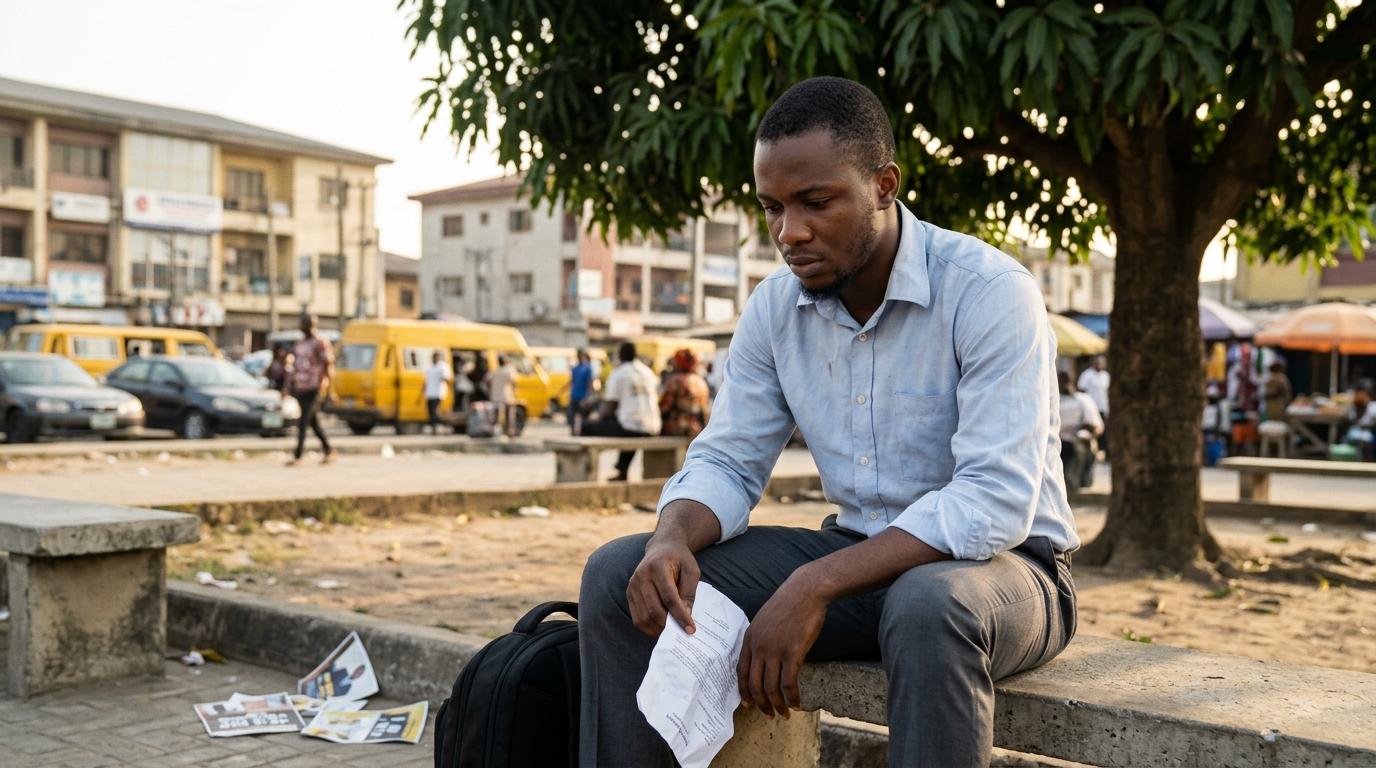
For a generation of Nigerians, a university degree was close to a guaranteed ticket into a good job. Many of today's graduates were raised on that promise by parents who sacrificed to deliver it. Then they graduate, finish NYSC, and meet a job market that seems not to have read the script.
The official statistics back up that frustration in a way that surprises many people. In Nigeria's National Bureau of Statistics (NBS) labour force surveys, unemployment among people with post-secondary education has consistently been higher than the national average, and higher than for people with only primary education. The NBS 2023 annual report found the unemployment rate was highest, at 9.4 percent, among those with post-secondary education (NBS, Nigeria Labour Force Survey Annual Report 2023). In the first quarter of 2024 it was 9.0 percent for post-secondary, against 6.9 percent for secondary, 4.0 percent for primary, 2.0 percent for postgraduates, and 5.3 percent nationally (NBS, Q1 2024 Labour Force Survey).
Why would the more educated be more likely to be unemployed? One plausible reading is that people with fewer options can't afford to wait, and take whatever informal work is available, while graduates hold out for roles that match their training. The data alone can't prove that explanation, but it fits the pattern. What follows is an attempt to lay out the main causes honestly, including where experts disagree.
First, a Warning About the Numbers
You will see wildly different unemployment figures online, and it helps to know why. In Q4 2020, the NBS reported an unemployment rate of 33.3 percent. In 2023 it switched to a methodology aligned with International Labour Organization standards, and the headline rate fell to 4.1 percent in Q1 2023 (TheCable). The old figure counted people working fewer than 20 hours a week as unemployed. The new one counts anyone who worked at least an hour for pay or profit as employed, and separately tracks underemployment, which stood at 12.2 percent in Q1 2023 (TheCable). The World Bank has explained that the change brings Nigeria in line with international standards rather than signalling a sudden jobs boom (World Bank Data Blog).
Critics, including some economists and civil society groups, argue the new definition understates the problem, because working one hour a week doesn't amount to a livelihood (Dubawa). We covered this tension in more detail in why Nigeria's unemployment rate looks low on paper. For graduates, the practical point is this: the low headline rate hides a labour market in which most work is informal. NBS data showed informal employment, including agriculture, at 92.6 percent in Q1 2023 (TheCable). For that reason, I have avoided some widely shared graduate-unemployment figures that come from unsourced compilations or older methodologies.
Cause 1: The Formal Economy Isn't Creating Enough Jobs
The simplest explanation is arithmetic. Estimates suggest nearly 600,000 people graduate from Nigerian universities each year, from more than 2 million enrolled students (Edugist, citing NUC figures). Figures vary by source and by whether polytechnics are included. A wider measure is far larger: one opinion writer estimates that 4.2 million young Nigerians enter the labour market each year while the formal economy generates roughly 650,000 jobs (BusinessDay opinion piece). Treat that as an estimate rather than an official statistic, but the direction is hard to dispute.
The International Labour Organization has linked Nigerian unemployment to jobless growth, meaning economic growth that doesn't produce enough decent jobs, alongside hiring moratoriums in many public and private institutions and continued job losses in manufacturing and oil (University World News). A sector that shrinks while the graduate pool grows will leave many people without a destination.
Cause 2: A Skills and Employability Gap
The most common explanation from employers is that many graduates lack workplace-ready skills. According to research by Proten International presented in Lagos in 2026, as reported by African Health Report, nearly 60 percent of Nigerian employers consider many fresh graduates unemployable for that reason, and more than 55 percent of graduates work outside their fields of study (African Health Report). The methodology behind those figures isn't detailed in the report, so read them as indicative.
Older academic work points the same way. A University of Ibadan study found a skills mismatch of 60.6 percent among recent graduates, with deficits in nearly all the skills employers wanted, except problem solving (ERIC, University of Ibadan study). That research is dated, so it shows how long the concern has existed more than current conditions. A 2026 review of the literature finds a widening mismatch between the digital competencies employers need and those graduates acquire (International Journal of Innovative Research and Technology, July 2026). Jobberman's managing director has put it as a "talent alignment problem" rather than a supply problem (Premium Times).
The mismatch isn't only about soft skills. Policy commentary notes that Nigeria produces many graduates in oversubscribed disciplines, while healthcare, allied health, and technical fields remain understaffed (The Guardian Nigeria). Employers in manufacturing, construction, ICT, and energy report difficulty filling technical roles even as graduate unemployment stays high (Legit.ng).
But Is It Really Mismatch? The Counterargument
It would be unfair to present the skills gap as settled. A Lagos-focused study argues that policy built entirely on a skills-mismatch diagnosis can backfire, and that oversupply of graduates is more likely than mismatch to be the main driver of graduate unemployment (Graduate Unemployment in Nigeria: Survival Strategies of Lagos Youths). Put simply: if there are three graduates for every graduate-level job, then even a perfectly skilled graduate pool leaves two without work.
Both explanations can be partly true, and for a graduate the distinction matters. If the problem is only skills, you can fix it by upskilling. If it is partly oversupply, then upskilling improves your odds against other applicants but can't create jobs that don't exist. This is why the practical advice later in this article focuses on improving your position and widening where you look.
Cause 3: A Disrupted Higher Education System
Nigerian universities have struggled with repeated shutdowns. The Federal Government has said the country lost a cumulative five years to ASUU industrial action in the ten years before 2023, with almost 52 strikes, delaying graduations and affecting the quality of learning and global competitiveness (The Guardian Nigeria). That is the government's account, and the union has its own account of why strikes happened, usually relating to funding and the implementation of agreements. Whichever side you favour, the effect on students is the same: delayed graduation and interrupted learning.
Funding is the other recurring theme. Education advocates have long argued that Nigeria's education budget falls below UNESCO's recommended share of 15 to 20 percent, which they link to the quality of graduates produced (University World News, 2021). Those figures date from 2021, so check current budgets before quoting them.
Cause 4: The Experience Trap and How Hiring Actually Works
Even graduates with the right skills face a barrier at the door. Nigerian commentators have written about entry-level roles that ask for two to five years of experience, leaving fresh graduates unable to qualify for the very roles meant to launch careers (TheCable; The Guardian Nigeria).
Informal networks matter too. A 2022 Stutern graduate report, as cited in an HR statistics roundup, found 39.67 percent of employed Nigerians learned about their jobs through personal contacts, against 14.43 percent through recruitment agencies and online job sites (Motherboard HR Statistics). That is a secondary citation, and it measures how people found out about jobs rather than formal referrals. It still suggests graduates without networks start at a disadvantage.
Cause 5: Underemployment and Informality Hide a Bigger Problem
Many graduates are not technically unemployed, which is part of why the official numbers look so mild. They run small businesses, drive for ride-hailing apps, or take part-time and informal work that doesn't use their qualifications. NBS reported the share of youth not in education, employment, or training at 14.4 percent among 15 to 24-year-olds in Q1 2024 (NBS, Q1 2024), but the larger group is those who work without earning enough or using their training. This links to a pattern we explored in Gen Z in the workplace: many young Nigerians combine formal jobs with side hustles because one income isn't enough.
What Graduates Can Actually Do About It
None of this means graduates are powerless. It means the strategy needs to account for a crowded market.
Treat your degree as the baseline, not the finish line. Build at least one demonstrable, in-demand skill alongside it. AI fluency is increasingly expected across roles, and we cover what employers look for in AI skills employers now expect from every candidate. It also pays to understand which roles are most exposed, as covered in jobs most and least exposed to AI automation, since routine clerical work faces the biggest pressure.
Show proof, not just qualifications. Projects, a portfolio, and specific achievements count for more than a list of duties. Our guide to CV mistakes that cause instant rejection is a good place to start, and a complete job board profile helps recruiters find you in the first place.
Look at fields with real demand. Technical, healthcare-adjacent, and digital roles are where employers report shortages. Cybersecurity is one example, covered in cybersecurity jobs in Nigeria.
Widen where you search, including remote work. Remote and online roles open markets beyond Nigeria's formal job pool, as discussed in how Nigerians are making a living working online.
Use internships carefully. Experience matters, but know your rights in unpaid arrangements, as we explain in unpaid internships and their legality.
Keep a steady application rhythm. Browse current vacancies and set up alerts on the MyJobAlly jobs page, so new roles reach you without daily searching.
What Would Need to Change at the System Level
Graduates can only do so much about structural problems. Commentators have proposed several fixes. Nigeria lacks a real-time skills observatory tracking demand, wages, and employment outcomes across sectors (Legit.ng), and a labour market intelligence system could inform admission quotas and curriculum (Edugist). The Federal Government has launched an Entrepreneurship, Innovation and Business Incubation Certification programme aimed at building practical skills (The Guardian Nigeria), and technical and vocational training is being expanded (Legit.ng). Whether these efforts will be enough remains to be seen, and independent evaluation of their results will matter.
The Bottom Line
Graduate unemployment in Nigeria has no single villain. It is the product of an economy that creates too few formal jobs, a higher education system hit by disruption and funding gaps, a real but contested skills gap, hiring practices that favour connections and experience, and an informal economy that masks how many graduates are underemployed. Blaming graduates for being "unemployable" ignores the first and last of those, and blaming the economy alone ignores the ones graduates can influence. The most useful stance for a job seeker is to hold both truths at once: the system is stacked, and the people who improve their position, by building proof of skill, widening their search, and staying visible, still get hired.
This article draws on NBS Nigeria Labour Force Survey reports, the World Bank, the ILO via University World News, Nigerian press and policy commentary, and academic studies, current as of October 2026. Unemployment statistics in Nigeria changed methodology in 2023, so figures from before and after that date are not directly comparable. Several figures cited come from opinion pieces or secondary sources and are labelled as estimates; verify against the linked sources before relying on them.