 By MyJobAlly
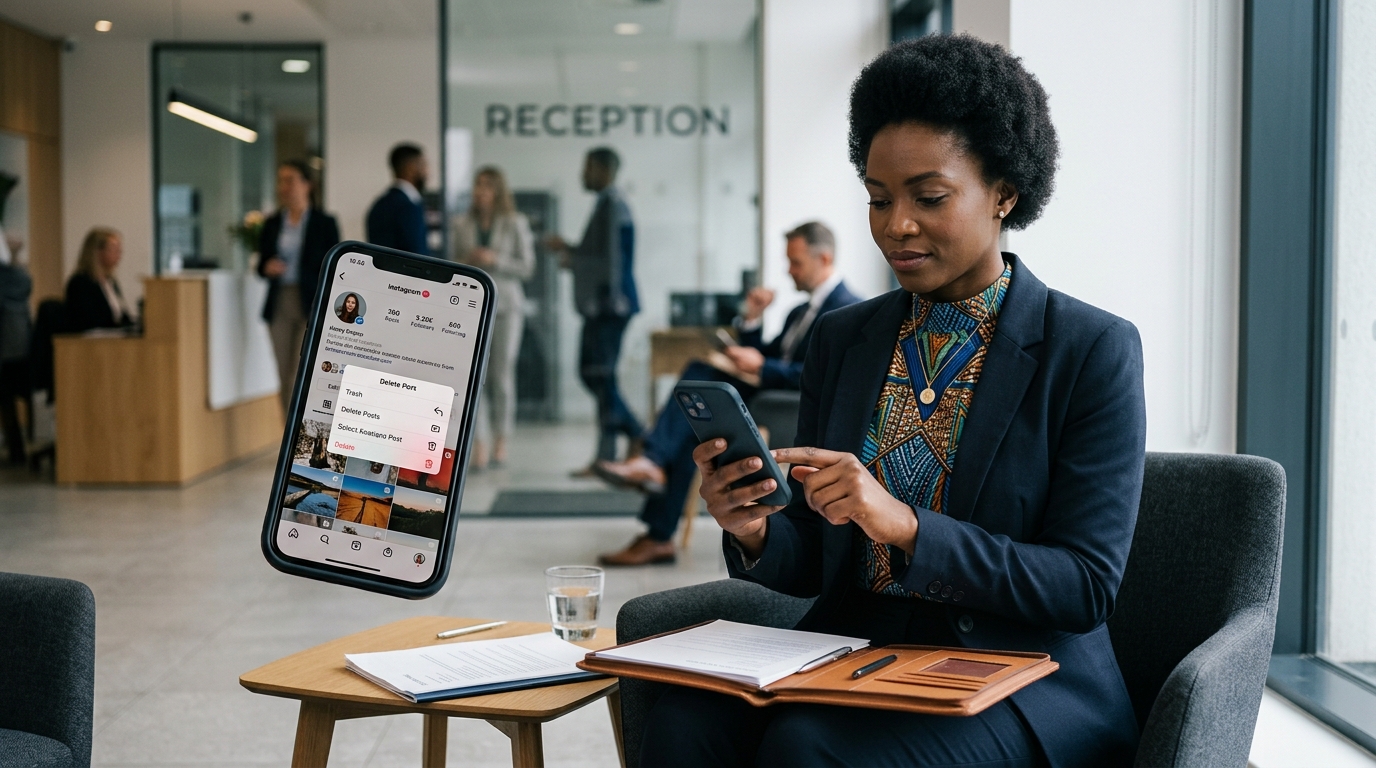
Your interviewer may have searched your name before you walked in. Here is what the research says about social media screening, which posts do the most damage, what Nigerian privacy law says, and a 30-minute plan to clean up your online footprint.
Last updated: 18 October 2026
Let's start with an uncomfortable idea: your interview may have started days before you sent your CV. For many hiring managers, a quick search of a candidate's name and social profiles is routine. What they find can help you, but it can also quietly end your chances, and you will never be told why.
This article looks at how common social media screening is, what employers say they look for, why the practice is also flawed, what Nigerian law says about it, and exactly what to review before your next interview. Most of the surveys cited come from the United States, so treat them as benchmarks rather than Nigerian figures. We found no Nigerian survey on how often employers screen candidates online.
The Short Answer
Before your next interview, delete or hide posts that attack employers or colleagues, reveal confidential information, contain hate speech or threats, joke about or promote crime, show explicit or heavy-partying content, or contradict your CV. Then check your tagged photos, comments, bio, and profile picture, and make sure the first thing a recruiter finds about you looks like the person you are presenting in the interview.
How Common Is Social Media Screening?
The figures vary by survey, but they all point the same way.
- A 2023 Resume Builder survey found that 73 percent of hiring managers use social media to evaluate applicants, mainly to confirm cultural fit and verify application details, and 85 percent of them said they had rejected a candidate over something they found online (Business News Daily).
- A Harris Poll for Express Employment Professionals found that 60 percent of hiring managers believe every candidate's social profiles should be reviewed (same source).
- A compilation of recent surveys puts the share of employers using social media checks anywhere from 67 to 91 percent, with over half reporting they have rejected candidates based on what they found. It also cites a Manifest survey of 505 US employers in which 79 percent said they had rejected a candidate over social media content, and a Veremark analysis in which 61 percent reconsidered or withdrew an offer after reviewing a candidate's social media (FMC Group, compiling surveys). Those are secondary figures, so check the originals before quoting them.
The spread between 67 and 91 percent is a reminder that no one number is reliable. What matters is the pattern: a large share of employers look, and many have said no because of what they saw.
The Catch: Screening Is Common, but It Is Also Flawed
Here is the part that makes this fair to everyone. Research by Chad Van Iddekinge at the University of Iowa's Tippie College of Business, published in Harvard Business Review, found that much of what employers dig up on social media is information they are ethically discouraged or legally prohibited from taking into account, and that little of it predicts job performance (Tippie College of Business). SHRM has also warned that broad social media screening can expose characteristics such as race, religion, gender, disability, and age, and that once an employer knows them, it is hard to prove they weren't considered (SHRM).
That means two things can be true at once. Employers shouldn't judge people by their private lives, and many still do. Since you can't control how a recruiter behaves, the practical answer is to control what they can find.
What to Delete or Hide: The Checklist
The categories below are drawn from what employers and HR experts commonly flag. SHRM's coverage, for example, lists candidates found promoting criminal activity, spreading hate speech, or making derogatory comments about co-workers or employers as classic red flags (SHRM). The rest of the list reflects common sense and is our suggestion.
- Posts that attack or mock current or former employers, bosses, or colleagues. A public rant tells a recruiter how you may talk about them one day.
- Confidential information from past jobs or clients. Screenshots of internal chats, customer details, or company plans can suggest you can't be trusted with sensitive information.
- Hate speech, harassment, threats, or discriminatory remarks. These are serious red flags for any employer.
- Content that promotes, jokes about, or links you to crime, fraud, or scams. Even "jokes" can be read literally.
- Explicit or sexually provocative content on a public profile.
- Heavy-partying, drinking, or drug-related content. What you do in your free time is your business, but a public feed full of it can raise questions in a screening.
- Anything that contradicts your CV. Verifying application details is one of the main reasons managers check social media, per the Resume Builder survey above. A different job title, date, or qualification on LinkedIn can look like dishonesty.
- Angry arguments and personal attacks in comment sections. Heated exchanges, even on topics you care about, can make you look hard to work with.
- Unprofessional handles, bios, and profile photos. Your first impression may be a username.
- Old posts you wouldn't stand by today. A Technext piece on a Paystack co-founder's dismissal in November 2025 after old, explicit tweets resurfaced included a labour lawyer's view that Nigerian law allows employers to rely on such posts to the extent they have present-day reputational consequences, especially for senior leaders (Technext). That case is contested and we take no view on it. The lesson is simply that old posts can come back.
Deleting Isn't Always Enough
A few practical limits are worth knowing (these are our suggestions, not research findings).
- Screenshots and archives. Others may have saved your posts, and deleted content can sometimes still be found.
- Tags and comments on other people's pages. You may not be able to delete them, but you can usually remove tags and ask friends to remove photos.
- Group chats and old accounts. Check forgotten profiles on platforms you no longer use.
- Privacy settings help but don't guarantee. Treat anything online as potentially visible.
- Don't delete if there is a legal or disciplinary dispute. If you are involved in a formal complaint or case, get advice before deleting anything, because removal could be misread.
What Nigerian Law Says About Screening You
Nigerian candidates have some protections, though the rules are still developing. The Nigeria Data Protection Act 2023 applies to recruitment, and an employer-of-record firm's guide advises that employers should obtain explicit written consent before collecting or processing a candidate's data (CXC Global). A BusinessDay column on employee data protection notes that some employers go beyond reasonable checks, probing into social media activity, medical history, or previous salary without consent, and says the scope of background checks should be proportional, relevant, and authorised (BusinessDay). A DLA Piper note adds that personal data used in hiring must have a documented lawful basis (DLA Piper). Some employers publish candidate privacy notices that explain your data rights and how to complain to the Nigeria Data Protection Commission, as one bank's notice does (Citigroup Nigeria candidate privacy notice).
What this means for you: you can ask an employer what background checks it runs, what data it uses, and on what basis. Keep the answer in writing. This is general information, not legal advice, and whether a particular search breaches the law depends on the facts.
It Doesn't Stop When You Get the Job
Social media can matter after you are hired too. In Nigeria, a lawyer quoted by Technext explained that courts apply a proportionality test, balancing an employer's legitimate interests against the employee's rights to privacy and expression, and that clearly drafted and properly communicated social media or conduct policies can serve as valid grounds for discipline, provided due process is followed (Technext). A Forbes Advisor survey reported that 43 percent of workers believe their employers monitor online activity, and most employers said they would fire staff over certain posts (Business News Daily). So read your contract and staff handbook for social media rules.
Don't Just Delete: Make Your Profile Work for You
Cleaning up is half the job. The other half is giving employers something good to find. Here are our suggestions.
- Complete one professional profile. A clear photo, headline, and summary matter (why an incomplete job board profile costs you offers).
- Make your CV and profiles match. Titles, dates, and qualifications should be identical (CV mistakes that cause instant rejection).
- Show your skills. Share a project, a short lesson, or a result, and add skills employers want (AI skills employers now expect from every candidate).
- Be careful if you work online or with international clients. Remote clients often check your profiles before they hire (how Nigerians are making a living working online).
- Keep a personal account separate if you want. A private, friends-only account for personal life and a public professional one is a common approach.
A 30-Minute Cleanup Plan
- Minutes 1 to 5: Search your name and common variations in a private browser window. Note what appears.
- Minutes 6 to 12: Review the first page of each public profile: bio, photos, pinned posts, handle.
- Minutes 13 to 22: Scroll back through your recent posts and tagged photos, and delete or hide anything on the checklist. Remove tags.
- Minutes 23 to 27: Tighten privacy settings and check old accounts.
- Minutes 28 to 30: Compare your LinkedIn with your CV and fix any mismatch.
What Not to Do
Don't go completely dark and call it done. A professional profile helps employers verify you, and a blank footprint can leave a gap where your good impression should be. Don't create a fake identity. Misrepresentation will hurt you more than an old post. Don't argue with a recruiter or employer online. Take disputes offline. Don't assume "private" means private. Screenshots travel. Don't delete evidence in a legal dispute without advice. Don't panic about every old photo. Focus on the content that shows poor judgment, hostility, dishonesty, or confidentiality breaches. Don't pay anyone who promises to "erase your online past" for a fee without checking they are legitimate.
Frequently Asked Questions
Do employers check candidates' social media? Many do. Surveys, mostly from the United States, suggest roughly two-thirds to over 70 percent of employers or hiring managers use social media to research candidates, and many have rejected someone over what they found. We found no Nigerian survey.
What should I delete from social media before an interview? Posts that attack employers or colleagues, confidential information, hate speech or threats, crime-related content, explicit or heavy-partying content, anything that contradicts your CV, and old posts you wouldn't stand by today.
Should I delete my social media accounts completely? Not usually. A clean, professional presence helps employers verify you. Clean up, tighten privacy settings, and keep a professional profile.
Is it legal for employers to check my social media in Nigeria? The Nigeria Data Protection Act applies to recruitment, and commentators say employers should have a lawful basis, keep checks proportional, and obtain consent where needed. Ask what checks an employer runs.
Can I be fired for something I posted? Possibly. Nigerian courts consider the employer's legitimate interests, your contract, the employer's policies, and due process. Read your contract and staff handbook.
Do old tweets or posts really matter? They can. A lawyer quoted by Technext said Nigerian law allows employers to rely on old posts to the extent they have present-day reputational consequences, particularly for senior roles.
Does a private account protect me? It helps, but it isn't a guarantee. Posts can be screenshotted or shared by others.
The Bottom Line
Social media screening is common, imperfect, and often unfair, but it is also a reality. Your best protection is to review your footprint before an employer does. Delete or hide posts that show hostility, dishonesty, or poor judgment, make your profiles match your CV, tighten your privacy settings, and give recruiters something good to find. Then go into your next interview knowing the first impression has already been made, and that you made it yourself.
This article draws on Business News Daily (reporting Resume Builder, Harris Poll, and Forbes Advisor surveys), FMC Group (compiling Manifest and Veremark data), the University of Iowa's Tippie College of Business (reporting Harvard Business Review research), SHRM, Technext, BusinessDay, CXC Global, DLA Piper, and Citigroup's Nigeria candidate privacy notice, current as of October 2026. Most survey data comes from the United States, much of it secondary, and is used as a benchmark only. We found no Nigerian survey on employer social media screening. The delete checklist combines employer-reported red flags with our own suggestions. The Paystack case is contested and cited only for the legal commentary. The legal summary is general information, not legal advice, so consult a qualified employment lawyer about specific situations. This article is not career advice.